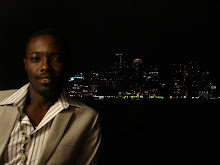
A couple of months ago, I came here to ask for your assistance in implementing a REACH Ghana project in Glefe, Ghana. Through the help of many of you, readers, friends, family and other REACH Ghana associates, we raised close to $4,000. The official tallies are yet to be made but I am here to give you thanks for your support and to give you an unofficial account of the difference your money made.
We arrived that morning to Glefe to a water body, whose banks were filled with filth, puddles with stagnant water and trash. It was readily apparent the community needed some sort of intervention and, at the Ghana Health outpost, people were trickling in for it.
Through the course of the day, we screened approximately 200-300 children, women (including nursing and pregnant mothers), and men for malnutrition, diabetes, high blood pressure and breast cancer. Once attendees passed through the screening process, they were transferred to a final station where they were counseled on healthy eating and lifestyles and where needed, given medication supplied by Cocoa Clinic for malaria.
At this station, one hundred insecticide-treated mosquito nets were distributed to nursing mothers and pregnant women in the hopes of decreasing the incidence of childhood malaria in those homes. Parallel to this, one hundred and seventy one children and elderly people were registered for the National Health Insurance Scheme allowing them access to free healthcare and some medications for a year. REACH capped off the day by donating weighing scales, an electronic sphygmomanometer and the canopy tent under which we held activities to the health outpost.
Moving forward, REACH has initiated work with the Member of Parliament for the area, and Zoomlion, a waste management company towards establishing a waste disposal system in the community. We will be commissioning studies of the project’s effectiveness in the coming months.
As the organization looks forward to another year full of ambitious projects like the HIV/AIDS Intervention and Clean Water for Life initiatives, I would like to thank all our sponsors and ask for your continued support in making a better Ghana a reality.
For pictures of the event and other REACH news, go here and here and become a fan on facebook.
Special thanks to Maame Sampah, REACH Ghana Executive Secretary, Marie-Stella Essilfie and William Okyere Frempong, Local Operations Directors of REACH Ghana, students of the University of Ghana Medical School, volunteering members of REACH Ghana, REACH Ghana Executive and Advisory Boards, Cocoa Clinic, Citi FM and the New Ghanaian Newspaper.
Prime
*************************************************
This is the way I choose, the destiny I pursue
To help the unfit and the fit
To treat each according to his need
*************************************************
Showing posts with label University of Ghana Medical School. Show all posts
Showing posts with label University of Ghana Medical School. Show all posts
Saturday, February 19, 2011


Tuesday, January 12, 2010
Myself -- Village Idiot
My name is Edo Bedzra, I come from Xikpo in the Volta Region. My father’s name is …. My mother’s name is …. If you grew up in the Ghanaian educational system, you know where I should go with the essay. But I’m not going there. Well, see, the thing is, I am sorta going there but will not tell you my favorite food. I’ll tell you about my trip to the Volta Region of Ghana and the things I saw on the way there.
We’ll begin my trip at Madina a suburb of Accra in the Greater Accra Region and end at Torgbelotokope a burb of Dabala in the Volta Region of Ghana and along the way, we will mostly comment on the positives. I had to make a long round about trip from my bus stop – Firestone – to Atomic Junction because of the current expansion of the Tetteh Quarshie Roundabout – Dodowa road into a three carriage road in each direction, and the overpass to be constructed at Atomic. After the initial inconvenience of the detour, one gets onto the dusty trail of road building between Atomic Junction and Okponglo that left thoughtlessly white shirts brown after a few trips and informed my black shirted choice this time round. On the way, I see the Presbyterian Boys Secondary School on the left curiously old but still producing some of the best scientific minds Ghana has seen and across from it, the ubiquitous upshot of structures and construction work of multiple hostels to cater for the ever-growing need for accommodation of students at the University of Ghana. After that, it’s the ambitious university of Ghana Stadium rising rather majestically on the roadside that captures my attention and I wonder from whence the finances for it arise and the prioritization of projects in our beacon of education.
This brings me to the Tetteh Quarshie roundabout quite nicely designed and linked to our main motorway which has led some to the decongestion of traffic and increased productivity in some intangible way. By its side is the Accra mall, the new hangout place for high schoolers on break, and distributor of many goods South African. The road into Accra from here has the same old stuff, Airport, Airport City still under construction with a functioning Holiday Inn and a Hilton under construction, 37 Military Hospital and of course the presidential palace – see the piece below. You also see a nicely built Ghanaian College of Physicians and Surgeons which I hope is doing something positive for Ghana – watch for the entry on the practice of medicine in Ghana sometime in the future. Up next, the National Theater where I alighted at the Novotel bus stop to make my walk into the Tudu station for a tro-tro to Dabala. It was a national holiday so the city center was not as bustling as it usually is and I could drag my bag nicely on the sidewalk to the chagrin of the kayayei (porters who help carry multiple and heavy loads for quite small amounts of money). These porters are predominantly urban female immigrants from the Northern regions and are left to the elements and dangers of the streets. A few of them who could not have been older than 15 have little kids on their back or lying by them on the pavements and I’ll leave it to the readers’ imagination to ponder how the children could have happened. In the mini-van at the station, I saw another one with a storey of suitcases that must have been taller than her. She’s in the picture below.

She’s making a livelihood though and an honest one and along with her, the market women selling all wares from fruit juices to biscuits, singlets to rechargeable torchlights imported from China and the guy who wanted to sell gold-plated necklaces and a weird assortment of belts to me. Their interactions with passengers and the back and forth bargains under the scorching sun are so traditionally Ghanaian. I could drive a bargain in my time.
2 hours later, the 14 passengers to get the van full were set and I could leave for my village. This part of the trip, while longer, is rather lacking in the excitement of the previous one. The main attractions are the branch off the main road to Ada where there is the Ada Beach Resort, a party ground and a place for the holidays as evidenced by the multiple cars with families foreign and local heading in that direction. Then one arrives at the Lower Volta Bridge across the Volta River along which lies the multiple communities like Sogakope, groves, Hotel Cisneros and the Holy Trinity Spa and Health Farm. The spa is an exercise in luxury and an increasingly popular destination for tourists and the upwardly mobile Ghanaian. It boasts cruises, spa services and general relaxation overseen by Dr. Anyah. There have been complaints about quality of service, however. I might be able to tell you soon what a mole thinks about the operation.
As has become the norm in my recent entries, I’ll leave you with food for thought. The most glaring presence on our road, during my 2 hour journey, was the police checkpoints. The more established ones, including the ones fashioned out of Polytank water storage tanks did their cursory checks—for what, I dunno—and let our van through. But between these, there were others with two or three policemen ostensibly checking for defects in vehicles or licenses and reporting to the authorities for legal action/safety of the passengers. I say ostensibly because when our van got the checkpoint near Hleve, a couple of meters from the Sogakope District Hospital serving the South Tongu District, we were stopped. The driver, by whom I was sitting, went out with a 1 cedi (71 cents) note in hand and no driving documents. A second later, he was back empty handed and we were waved on. This, dear reader, is not a rare occurrence. Whatever defects our vehicle might have had, whatever defiency its driver may suffer from are forgotten and our lives and their futures are sold for that 1 cedi. Some have argued it is because civil servants are paid so little that corruption exists but is the driver making so much he can give out to these officers? And are our lives so worthless a contract between the police and law-breaking vehicle operators can buy them? May the new year bring with it hopes and changes worthy of our progress as a nation. And may God be with us all.
Prime
*************************************************
This is the way I choose, the destiny I pursue
To help the unfit and the fit
To treat each according to his need
*************************************************
We’ll begin my trip at Madina a suburb of Accra in the Greater Accra Region and end at Torgbelotokope a burb of Dabala in the Volta Region of Ghana and along the way, we will mostly comment on the positives. I had to make a long round about trip from my bus stop – Firestone – to Atomic Junction because of the current expansion of the Tetteh Quarshie Roundabout – Dodowa road into a three carriage road in each direction, and the overpass to be constructed at Atomic. After the initial inconvenience of the detour, one gets onto the dusty trail of road building between Atomic Junction and Okponglo that left thoughtlessly white shirts brown after a few trips and informed my black shirted choice this time round. On the way, I see the Presbyterian Boys Secondary School on the left curiously old but still producing some of the best scientific minds Ghana has seen and across from it, the ubiquitous upshot of structures and construction work of multiple hostels to cater for the ever-growing need for accommodation of students at the University of Ghana. After that, it’s the ambitious university of Ghana Stadium rising rather majestically on the roadside that captures my attention and I wonder from whence the finances for it arise and the prioritization of projects in our beacon of education.
This brings me to the Tetteh Quarshie roundabout quite nicely designed and linked to our main motorway which has led some to the decongestion of traffic and increased productivity in some intangible way. By its side is the Accra mall, the new hangout place for high schoolers on break, and distributor of many goods South African. The road into Accra from here has the same old stuff, Airport, Airport City still under construction with a functioning Holiday Inn and a Hilton under construction, 37 Military Hospital and of course the presidential palace – see the piece below. You also see a nicely built Ghanaian College of Physicians and Surgeons which I hope is doing something positive for Ghana – watch for the entry on the practice of medicine in Ghana sometime in the future. Up next, the National Theater where I alighted at the Novotel bus stop to make my walk into the Tudu station for a tro-tro to Dabala. It was a national holiday so the city center was not as bustling as it usually is and I could drag my bag nicely on the sidewalk to the chagrin of the kayayei (porters who help carry multiple and heavy loads for quite small amounts of money). These porters are predominantly urban female immigrants from the Northern regions and are left to the elements and dangers of the streets. A few of them who could not have been older than 15 have little kids on their back or lying by them on the pavements and I’ll leave it to the readers’ imagination to ponder how the children could have happened. In the mini-van at the station, I saw another one with a storey of suitcases that must have been taller than her. She’s in the picture below.

She’s making a livelihood though and an honest one and along with her, the market women selling all wares from fruit juices to biscuits, singlets to rechargeable torchlights imported from China and the guy who wanted to sell gold-plated necklaces and a weird assortment of belts to me. Their interactions with passengers and the back and forth bargains under the scorching sun are so traditionally Ghanaian. I could drive a bargain in my time.
2 hours later, the 14 passengers to get the van full were set and I could leave for my village. This part of the trip, while longer, is rather lacking in the excitement of the previous one. The main attractions are the branch off the main road to Ada where there is the Ada Beach Resort, a party ground and a place for the holidays as evidenced by the multiple cars with families foreign and local heading in that direction. Then one arrives at the Lower Volta Bridge across the Volta River along which lies the multiple communities like Sogakope, groves, Hotel Cisneros and the Holy Trinity Spa and Health Farm. The spa is an exercise in luxury and an increasingly popular destination for tourists and the upwardly mobile Ghanaian. It boasts cruises, spa services and general relaxation overseen by Dr. Anyah. There have been complaints about quality of service, however. I might be able to tell you soon what a mole thinks about the operation.
As has become the norm in my recent entries, I’ll leave you with food for thought. The most glaring presence on our road, during my 2 hour journey, was the police checkpoints. The more established ones, including the ones fashioned out of Polytank water storage tanks did their cursory checks—for what, I dunno—and let our van through. But between these, there were others with two or three policemen ostensibly checking for defects in vehicles or licenses and reporting to the authorities for legal action/safety of the passengers. I say ostensibly because when our van got the checkpoint near Hleve, a couple of meters from the Sogakope District Hospital serving the South Tongu District, we were stopped. The driver, by whom I was sitting, went out with a 1 cedi (71 cents) note in hand and no driving documents. A second later, he was back empty handed and we were waved on. This, dear reader, is not a rare occurrence. Whatever defects our vehicle might have had, whatever defiency its driver may suffer from are forgotten and our lives and their futures are sold for that 1 cedi. Some have argued it is because civil servants are paid so little that corruption exists but is the driver making so much he can give out to these officers? And are our lives so worthless a contract between the police and law-breaking vehicle operators can buy them? May the new year bring with it hopes and changes worthy of our progress as a nation. And may God be with us all.
Prime
*************************************************
This is the way I choose, the destiny I pursue
To help the unfit and the fit
To treat each according to his need
*************************************************
Friday, July 31, 2009
Brain Drain -- A Dead Hero or A Live Coward
I recently watched Public Enemies, the "autobiography" of John Dillinger, that most inglorious American robber of the yesteryears. In one scene, a bank manager attempted to delay the inevitable by fiddling with his keys. Dillinger smacked him upside of the head and said matter of factly, "you can be a dead hero or a live coward". The words if ever spoken by the man, most likely, did not start with Johnny and they hold meaning for more than that banker. I thought, "surely, this is no different from the choice faced by every migrating Ghanaian doctor". But is it?
According to a Ghana Ministry of Health report, there were on average (median) 3 doctors and 35 nurses per 100,000 people in the country in 2005. That made a total of 1241 physicians and 6599 nurses in a country of more than 20 million people. There were also 791 Ghanaian trained doctors practising in countries outside Ghana (NEJM 2005;353:1810-8) and that's only those trained in Ghana. The numbers were better in 2007 with reports of 13 doctors and 92 nurses per 100,000 (NEJM 2007;356:440-3). So we have advanced a bit yes? But why exactly do physicians, with a sworn oath to serve mankind leave the hallowed shores of Chorkor and Cape Three Points for the white man's land? The reasons may surprise you.
We'll start with the obvious one -- money. See there is more money to be made in the US and UK as a health professional than in Ghana. Given the current rate of production of doctors in the US lags quite far behind the ever increasing need for them, there will always be the demand for doctors from other countries. So how much, exactly, is the Ghanaian doctor making? The statistics, as they usually are from developing nations, are murky at the least and depends on who you ask. The only information I found after scouring the web is found here. A house officer, the equivalent of a resident apparently made $700/700 cedis per month in 2007 if we are to take the word of the doctors. That's half the income an undergraduate investment bank intern makes in per week in the US. Compare this to how much a community activist turned Member of Parliament makes and you can understand the agitation of the incessantly striking doctors back home.
In a country where a plate of Selsbridge fried rice cost in the range of 4 cedis the last time I checked and does not satiate me, a man's could run through that much in ehhh, 2 months. Now let's add a wife and 2 kids and we are coming down to less than a month. And you say, the average man eats kenkey anyways so why shouldn't the doctor? You are indeed right. Include this factor, rent, utilities, count the number of extended family members our young doctor must support in addition to the mother who broke her back for him to go to school and he saves maybe 150 cedis at the outside ceteris paribus. The average income of a medical resident in the partners medical system in Boston, MA, was about $50,000 annually as of '07. That's before taxes of course, rent is much higher than in Ghana at close to $1,500 depending on where you live, average meal costs $8 so no you are not living like a king/queen. But you are living. And your dollars would go a longer way in Ghana -- or used to. So, would you rather live in Ghana and make the meager income, serving your healthcare deprived people or would you rather migrate out to serve the healthcare deprived people of the US and make much more? At least that used to be the question.
Recently, a different generation of doctors have arisen, driven by a patriotic zeal to serve their country but still, looking for the way out. Why? I had a rather disturbing facebook conversation with one of my high school mates recently. He is currently a student at the University of Ghana Medical School. He, see, was in the US on an exchange program and was looking to return for medical school and eventually, work. Why, I asked, are you, a Ghanaian, trained on my mother's tax income thinking of leaving the country when my retired mother is back there? Who will deal with her medical issues? Where is the return on her investment? The government says pay a fine if you leave immediately after training but will the fine treat her if she falls sick? I was of course not talking to someone without family in the country. He gave me a laundry list of reasons why he could not stay in the country. But before that, he summed it up in one word -- Indiscipline.
According to him, there isn't only lack of equipment with which to deliver the needed care but the available ones frequently break down and are usually not fixed. Working conditions, described as hours, available nurses, are terrible and the bureaucracy associated with the teaching and delivery of the arts and science of medicine is legendary. Add into this the general laisssez faire approach of Ghanaians and the concept of African time (Case in point, months after I'd liaised with a group of philanthropists in Boston to send books to the UGMS, I am still waiting for the reply from a vice dean of the school on whether the delivered books have been claimed from the harbour) and you get the frustrations of an idealistic young man who went into the profession with the fire and brimstone spewing prophecies of a doomsday preacher only to crash with disillusion. Of course included in those ideals is the promise of riches but one cannot deny the inherent good in him. I, as expected, berated him for expecting someone else to fix his country while he leaves to prosper in another's. He was not patriotic, I said. I, I boasted, am going back to fix the country and my education was not even subsidized by the government. But is he any less patriotic than I? Am I any better for going back? Until systemic changes are made and political will for He definitely would not be a hero for staying home. It is expected that he stays. But is he a coward for leaving? I think not.
In the following posts, look out for my thoughts on the immigrant physician-trainee experience and the generational movement with every intention of going home to help change and make a living in Ghana.
Prime
*************************************************
This is the way I choose, the destiny I pursue
To help the unfit and the fit
To treat each according to his need
*************************************************
According to a Ghana Ministry of Health report, there were on average (median) 3 doctors and 35 nurses per 100,000 people in the country in 2005. That made a total of 1241 physicians and 6599 nurses in a country of more than 20 million people. There were also 791 Ghanaian trained doctors practising in countries outside Ghana (NEJM 2005;353:1810-8) and that's only those trained in Ghana. The numbers were better in 2007 with reports of 13 doctors and 92 nurses per 100,000 (NEJM 2007;356:440-3). So we have advanced a bit yes? But why exactly do physicians, with a sworn oath to serve mankind leave the hallowed shores of Chorkor and Cape Three Points for the white man's land? The reasons may surprise you.
We'll start with the obvious one -- money. See there is more money to be made in the US and UK as a health professional than in Ghana. Given the current rate of production of doctors in the US lags quite far behind the ever increasing need for them, there will always be the demand for doctors from other countries. So how much, exactly, is the Ghanaian doctor making? The statistics, as they usually are from developing nations, are murky at the least and depends on who you ask. The only information I found after scouring the web is found here. A house officer, the equivalent of a resident apparently made $700/700 cedis per month in 2007 if we are to take the word of the doctors. That's half the income an undergraduate investment bank intern makes in per week in the US. Compare this to how much a community activist turned Member of Parliament makes and you can understand the agitation of the incessantly striking doctors back home.
In a country where a plate of Selsbridge fried rice cost in the range of 4 cedis the last time I checked and does not satiate me, a man's could run through that much in ehhh, 2 months. Now let's add a wife and 2 kids and we are coming down to less than a month. And you say, the average man eats kenkey anyways so why shouldn't the doctor? You are indeed right. Include this factor, rent, utilities, count the number of extended family members our young doctor must support in addition to the mother who broke her back for him to go to school and he saves maybe 150 cedis at the outside ceteris paribus. The average income of a medical resident in the partners medical system in Boston, MA, was about $50,000 annually as of '07. That's before taxes of course, rent is much higher than in Ghana at close to $1,500 depending on where you live, average meal costs $8 so no you are not living like a king/queen. But you are living. And your dollars would go a longer way in Ghana -- or used to. So, would you rather live in Ghana and make the meager income, serving your healthcare deprived people or would you rather migrate out to serve the healthcare deprived people of the US and make much more? At least that used to be the question.
Recently, a different generation of doctors have arisen, driven by a patriotic zeal to serve their country but still, looking for the way out. Why? I had a rather disturbing facebook conversation with one of my high school mates recently. He is currently a student at the University of Ghana Medical School. He, see, was in the US on an exchange program and was looking to return for medical school and eventually, work. Why, I asked, are you, a Ghanaian, trained on my mother's tax income thinking of leaving the country when my retired mother is back there? Who will deal with her medical issues? Where is the return on her investment? The government says pay a fine if you leave immediately after training but will the fine treat her if she falls sick? I was of course not talking to someone without family in the country. He gave me a laundry list of reasons why he could not stay in the country. But before that, he summed it up in one word -- Indiscipline.
According to him, there isn't only lack of equipment with which to deliver the needed care but the available ones frequently break down and are usually not fixed. Working conditions, described as hours, available nurses, are terrible and the bureaucracy associated with the teaching and delivery of the arts and science of medicine is legendary. Add into this the general laisssez faire approach of Ghanaians and the concept of African time (Case in point, months after I'd liaised with a group of philanthropists in Boston to send books to the UGMS, I am still waiting for the reply from a vice dean of the school on whether the delivered books have been claimed from the harbour) and you get the frustrations of an idealistic young man who went into the profession with the fire and brimstone spewing prophecies of a doomsday preacher only to crash with disillusion. Of course included in those ideals is the promise of riches but one cannot deny the inherent good in him. I, as expected, berated him for expecting someone else to fix his country while he leaves to prosper in another's. He was not patriotic, I said. I, I boasted, am going back to fix the country and my education was not even subsidized by the government. But is he any less patriotic than I? Am I any better for going back? Until systemic changes are made and political will for He definitely would not be a hero for staying home. It is expected that he stays. But is he a coward for leaving? I think not.
In the following posts, look out for my thoughts on the immigrant physician-trainee experience and the generational movement with every intention of going home to help change and make a living in Ghana.
Prime
*************************************************
This is the way I choose, the destiny I pursue
To help the unfit and the fit
To treat each according to his need
*************************************************
Subscribe to:
Posts (Atom)