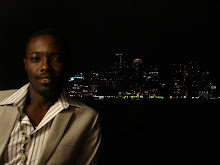
As I wrote this, I had spent close to a month in my beloved country working on a project. I had thoroughly forgotten what it felt like to be cold and alone in a foreign land; I did miss my girlfriend. I wrote from the village in which I was born and the room in which I had slept many a night. The nostalgia may have made me put the “might” in the title. A month prior, it was, a strong “Will”.
Ghana, has changed and not only for the worse. Things got more expensive once the four zeros were dropped from our cedi, yes, but there is a certain sense of stability and dignified standing that I have not seen in a while, nay in my lifetime. And this is in the sphere of politics.
My readers know well I do not believe in the political system and the lack of alternatives in Ghana with a revolving door shuffling in the same thieves and looters (see The Politics of Recycling) every eight years. I had come to decide then, that even though I had recently registered as a voter in my country, actually voting was a waste of my time. Having never voted, I imagined it gave one a warm and fuzzy feeling to vote another into or out of power and maybe even turn the derelict on the corner into a wealthy baron overnight but I could not quite see the difference it made.
All most governments need do in Ghana is loot enough to sustain them the eight years of opposition before they get back on the horse. But two recent things have made me waver a bit. In the recent Ivorian crisis, President Mills came out against military intervention, a threat made by the Economic Community of West African States, ECOWAS, of which Ghana is a signatory. Then he turned around and raised oil prices 30% to GH₵7 or about $5 per gallon thus removing most of the government subsidy. And he is up for re-election in a year.
Mills has his critics, chief among them me. He has been ineffectual on other fronts, has arguably been slow in prosecuting malfeasance in the past administration, allowed hooligans in his party to run loose and loaded his administration with old dogs. However, he has been very comfortable making unpopular decisions which he perceives, rightly or wrongly, to be necessary for the country’s progress and has stood calmly resolute in the face of an onslaught from his party and the opposition. Others have come close to doing similar things but Rawlings mostly did them in a dictatorship with no specter of electoral defeat and Kufuor went HIPC but spared more suicidal decisions till his second term when no further votes stared him in the face.
Mills may yet lose the next elections for a variety of reasons. The likely alternative, Akufo-Addo, I do not rate highly and has said some rather stupid, if overblown, things lately. But I may yet vote in those elections…for someone. Whoever it turns out to be, it will be someone, like Mills, who is convicted in their vision for the country and are willing to stake their political careers on it.
After all, the countless voting may be futile for many years but once in a blue moon, one comes along who is worth the struggle.
Prime
*************************************************
This is the way I choose, the destiny I pursue
To help the unfit and the fit
To treat each according to his need
*************************************************
Showing posts with label Politics in Ghana. Show all posts
Showing posts with label Politics in Ghana. Show all posts
Wednesday, March 2, 2011


Saturday, February 12, 2011
Imagine That
In this admittedly old news, Slate explores the recent occurrences of law students suing schools or citing them in bankruptcy lawsuits. The students argue that these schools knew there were few to no jobs available for students post graduation yet continued to encourage prospective students to apply. The schools then loaned such students large sums of money. The argument, then, is if schools advanced these loans knowing full well students would default on them, then they acted in bad faith and students should not have to repay loans.
If that sounds like the subprime mortgage crisis that plunged the US into a recession, it’s because it is pretty much like it. It also sounds like the SSNIT (Social Security and National Insurance Trust) loan scheme in Ghana. After all, the government does know the job market is bad, to put it mildly. The universities are fully aware they offer a lot of theoretical discipline and very little employable skill. Yet, they continue to exist.
And each year, thousands of graduates default on SSNIT loans that saw them through college leaving their guarantors, ordinary Ghanaians roped into the scheme, bearing the loss of retirement income among other things. And it’s easy for SSNIT to do this because the government of Ghana is the main employer and can deduct income from the cheques of guarantors.
Should the SSNIT loan scheme be shelved, university admission rates decreased and the building of new universities stopped then? I think not. Universities are in the education business. They offer an asset from which a consumer can generate income over a period of time. They, however, do not guarantee such a stream of income. They cannot, for instance, commit crimes to generate caseloads for more lawyers. I’m being facetious but the point is the onus is on the consumer to understand what such an education is worth to him and what he could possibly expect from it.
In Ghana, it is a simple case of looking around and knowing your only hope of getting a job in the first place is with a college degree. One goes to college then to make herself competitive for the next available job, not to ensure employment. But since neither your parents nor you can afford the cost of such a degree, the guaranteed SSNIT loan becomes an act of humanity from government and guarantors. Without them, the student would just find another way of paying for school or stay at home and not have that educational asset at all, for better or worse.
Who to blame, then? I vote government. Why does it exist if not to ensure prosperity of the nation? In as far as the public sector has lacked in additional job creation and has failed to create a conducive environment for private sector job growth, I blame the government. My question, therefore, is, “can we sue the government?” Come to think of it, this could make those law school loans worth it.
Prime
*************************************************
This is the way I choose, the destiny I pursue
To help the unfit and the fit
To treat each according to his need
*************************************************
If that sounds like the subprime mortgage crisis that plunged the US into a recession, it’s because it is pretty much like it. It also sounds like the SSNIT (Social Security and National Insurance Trust) loan scheme in Ghana. After all, the government does know the job market is bad, to put it mildly. The universities are fully aware they offer a lot of theoretical discipline and very little employable skill. Yet, they continue to exist.
And each year, thousands of graduates default on SSNIT loans that saw them through college leaving their guarantors, ordinary Ghanaians roped into the scheme, bearing the loss of retirement income among other things. And it’s easy for SSNIT to do this because the government of Ghana is the main employer and can deduct income from the cheques of guarantors.
Should the SSNIT loan scheme be shelved, university admission rates decreased and the building of new universities stopped then? I think not. Universities are in the education business. They offer an asset from which a consumer can generate income over a period of time. They, however, do not guarantee such a stream of income. They cannot, for instance, commit crimes to generate caseloads for more lawyers. I’m being facetious but the point is the onus is on the consumer to understand what such an education is worth to him and what he could possibly expect from it.
In Ghana, it is a simple case of looking around and knowing your only hope of getting a job in the first place is with a college degree. One goes to college then to make herself competitive for the next available job, not to ensure employment. But since neither your parents nor you can afford the cost of such a degree, the guaranteed SSNIT loan becomes an act of humanity from government and guarantors. Without them, the student would just find another way of paying for school or stay at home and not have that educational asset at all, for better or worse.
Who to blame, then? I vote government. Why does it exist if not to ensure prosperity of the nation? In as far as the public sector has lacked in additional job creation and has failed to create a conducive environment for private sector job growth, I blame the government. My question, therefore, is, “can we sue the government?” Come to think of it, this could make those law school loans worth it.
Prime
*************************************************
This is the way I choose, the destiny I pursue
To help the unfit and the fit
To treat each according to his need
*************************************************
Saturday, August 7, 2010
The Politics of Recycling
One said to Confucius: “Why are ye not in power, Sir?”
The Master answered: “What does the book say of a good son? 'An always dutiful son, who is a friend to his brothers, showeth the way to rule.' This also is to rule. What need to be in power?”
(Confucius, Confucius. The Sayings of Confucius. Hayes Barton Press, 478 B.C.).
Tuesday, November 3, 1992: Do you remember where you were? I do. I was 7yrs old, in Class 3. It was the first presidential election of the Fourth Republic of Ghana. It was 13 years in the making. 11 since Junior Jesus, Chairman Rawlings had completed his second coup d’etat. The election results would come to live in infamy as “The Stolen Verdict” but those were remarkable times to be alive. Oh yes, that evening, I was playing football on the little volleyball court adjacent the perpetually uncompleted Evangelical Presbyterian Church building in Dabala. This was the Volta Region. This was the World Bank…for the National Democratic Congress that is. It was the stronghold of the party formed by the newest “democrat” on the block; the soon to be President Rawlings.
The NDC had run a particularly shrewd campaign. There was the catchy “No retreat, no surrender. No curve, no bend. Straight to victory. NDC, Akatamanso” which blared from loudspeakers mounted on the newly minted Toyota pick-ups. Then there was the play on people’s superstition with fishermen suddenly catching crabs with the distinctive colors and umbrella of the NDC indelibly imprinted on their backs. The rumours spread like a harmattan fire; God and the gods had anointed the NDC. Thus when there was a funeral held behind the Post Office with a coffin for the elephant of the New Patriotic Party, it seemed only appropriate. The elephant had it coming. And that day when we all stopped play for a moment and shouted after the rickety old lady, tottering to the old JSS campus to put thumb to paper, to vote for Rawlings, we were only repeating the refrain so often sang--what I had heard from my grandfather’s Sanyo radio for 7 years, Chairman Rawlings…, Chairman Rawlings…, Chairman Rawlings. That,….and nothing else.
But this is not some trip-down-memory-lane piece. This is about a remarkable aspect of the political landscape of Ghana and of the many parties in our multi-party, very African Democracy. It is that long before the developed world started the green revolution, before the “pure water” sachets would dance freely in the putrid waters of the Korle Lagoon we were recycling. See in 1992, I heard of Rawlings, Adu Boahen, Limann, Arkaah, Mills, Mahama, even Kufuor. 18 years on and these same names ring out. Some, may they rest in peace, have since passed on. But as these parties proclaim allegiance to the Nkrumahs and Busias, so their leaders continuously descend directly from these dead presidents or the people around them. Welcome to the world of dynasties. Welcome to Political Recycling.
As I write this, Nana Addo Dankwa Akufo-Addo, the incessant chatterbox with the affected slang twang has been elected the flag bearer of the NPP beating virtually the same field he did the last time round. He is the son of Edward Akufo-Addo, member of The Big Six, and later president of Ghana in the Busia administration. Junior lost the last presidential elections as flag bearer for the NPP. But as surely as current President Atta Mills was elected again and again by the NDC in spite of losing two straight elections, so it seems, the NPP is recycling its limited resources. There is of course something to be said for brand and name recognition; it is arguably a major reason Mills won the last election. And within a party, loyalists at the top will push to get their candidate in place, helped by the specter of incumbency and inertia of the masses. So the recycling continues and the same trash gets put out over and over again.
But at what point is recycled material unusable? My dad used to say that the useful span for a man to implement his vision is at most 10 years. He is of course no expert but one would be hard pressed to find a politician who has ideas to last the first week of office let alone one hundred and twenty moons. So why do they keep coming back? My sister says it is because every rich man’s dream in Ghana is to be president. It is the ultimate status symbol. And since there really are no qualification requirements, anybody from the high school drop-out, Rawlings, through the non-practicing lawyer Kufuor to Akufo-Addo and the heart surgeon Frimpong Boateng with management lessons learned at the Korle-Bu Teaching Hospital can up and stand for the presidency. How one runs a country with absolutely no understanding of basic economics, surrounded by people practicing the economics of Adam Smith's time, is baffling to say the least. But alas, politics is a popularity contest and the lawyers are the best at painting black white so they inevitably rise to the top. It is worth noting that Akufo-Addo's wikipedia page and other biographies state he was called to the English Bar (Middle Temple). However, my search of the internet has no mention of a law school and his name cannot be found here.*
But even if this is our lot, even if we are eternally cursed with the same political parties going through our government like a revolving door, even if our state coffers have become like a street walker, screwed at every turn by the NDC, the NPP and once more by the NDC for the go around, must it be by the same men? Does neither the NPP nor NDC have any new blood? Are there no young women or men in the folds of these parties who can radically rethink our progress as a nation? Why does the old guard not step aside? Surely a lesson or two learnt in defeat can show the younguns the way to rule?
This nation deserves a better bunch of the criminals, ahem, politicians (apologies to The Dark Knight). Today, it is Akufo-Addo. Tomorrow, it will either be the ineffectual Mills or Nana Konadu Agyeman Rawlings, wife of ex-chairman, sorry, ex-president Rawlings. From the twenty years of Rawlings through the fourteen and counting of Mills and the thirteen since Akufo-Addo junior has been in parliament, the years have grown no kinder to our leaders. Wisdom, it seems, does not come with age. Their ten years are over; their visions depleted. And what is left are the depleted shells, dazed and confused and shouting the hollow promises of addicts looking for their next fix. We need, indeed we demand a viable alternative; for party, for president and for parliamentarian. Because if there is one arena where going green is bad for business, it is that of politics. Let’s keep the recycling to the environment. God Bless Our Homeland Ghana.
Prime
*************************************************
This is the way I choose, the destiny I pursue
To help the unfit and the fit
To treat each according to his need
*************************************************
* It has since the publishing of this article been shown, through some fine piece of investigation by Dzidzorli Agbleze, that Nana Akufo-Addo did pass Part II of the transitional Trinity Term Bar Final Exam and was invited to the Middle Temple of the Inns of Courts. His name can be found in the published list of examination successes in "The Times", Friday July 2, 1971. As of today, the law school he attended is still unknown.
The Master answered: “What does the book say of a good son? 'An always dutiful son, who is a friend to his brothers, showeth the way to rule.' This also is to rule. What need to be in power?”
(Confucius, Confucius. The Sayings of Confucius. Hayes Barton Press, 478 B.C.).
Tuesday, November 3, 1992: Do you remember where you were? I do. I was 7yrs old, in Class 3. It was the first presidential election of the Fourth Republic of Ghana. It was 13 years in the making. 11 since Junior Jesus, Chairman Rawlings had completed his second coup d’etat. The election results would come to live in infamy as “The Stolen Verdict” but those were remarkable times to be alive. Oh yes, that evening, I was playing football on the little volleyball court adjacent the perpetually uncompleted Evangelical Presbyterian Church building in Dabala. This was the Volta Region. This was the World Bank…for the National Democratic Congress that is. It was the stronghold of the party formed by the newest “democrat” on the block; the soon to be President Rawlings.
The NDC had run a particularly shrewd campaign. There was the catchy “No retreat, no surrender. No curve, no bend. Straight to victory. NDC, Akatamanso” which blared from loudspeakers mounted on the newly minted Toyota pick-ups. Then there was the play on people’s superstition with fishermen suddenly catching crabs with the distinctive colors and umbrella of the NDC indelibly imprinted on their backs. The rumours spread like a harmattan fire; God and the gods had anointed the NDC. Thus when there was a funeral held behind the Post Office with a coffin for the elephant of the New Patriotic Party, it seemed only appropriate. The elephant had it coming. And that day when we all stopped play for a moment and shouted after the rickety old lady, tottering to the old JSS campus to put thumb to paper, to vote for Rawlings, we were only repeating the refrain so often sang--what I had heard from my grandfather’s Sanyo radio for 7 years, Chairman Rawlings…, Chairman Rawlings…, Chairman Rawlings. That,….and nothing else.
But this is not some trip-down-memory-lane piece. This is about a remarkable aspect of the political landscape of Ghana and of the many parties in our multi-party, very African Democracy. It is that long before the developed world started the green revolution, before the “pure water” sachets would dance freely in the putrid waters of the Korle Lagoon we were recycling. See in 1992, I heard of Rawlings, Adu Boahen, Limann, Arkaah, Mills, Mahama, even Kufuor. 18 years on and these same names ring out. Some, may they rest in peace, have since passed on. But as these parties proclaim allegiance to the Nkrumahs and Busias, so their leaders continuously descend directly from these dead presidents or the people around them. Welcome to the world of dynasties. Welcome to Political Recycling.
As I write this, Nana Addo Dankwa Akufo-Addo, the incessant chatterbox with the affected slang twang has been elected the flag bearer of the NPP beating virtually the same field he did the last time round. He is the son of Edward Akufo-Addo, member of The Big Six, and later president of Ghana in the Busia administration. Junior lost the last presidential elections as flag bearer for the NPP. But as surely as current President Atta Mills was elected again and again by the NDC in spite of losing two straight elections, so it seems, the NPP is recycling its limited resources. There is of course something to be said for brand and name recognition; it is arguably a major reason Mills won the last election. And within a party, loyalists at the top will push to get their candidate in place, helped by the specter of incumbency and inertia of the masses. So the recycling continues and the same trash gets put out over and over again.
But at what point is recycled material unusable? My dad used to say that the useful span for a man to implement his vision is at most 10 years. He is of course no expert but one would be hard pressed to find a politician who has ideas to last the first week of office let alone one hundred and twenty moons. So why do they keep coming back? My sister says it is because every rich man’s dream in Ghana is to be president. It is the ultimate status symbol. And since there really are no qualification requirements, anybody from the high school drop-out, Rawlings, through the non-practicing lawyer Kufuor to Akufo-Addo and the heart surgeon Frimpong Boateng with management lessons learned at the Korle-Bu Teaching Hospital can up and stand for the presidency. How one runs a country with absolutely no understanding of basic economics, surrounded by people practicing the economics of Adam Smith's time, is baffling to say the least. But alas, politics is a popularity contest and the lawyers are the best at painting black white so they inevitably rise to the top. It is worth noting that Akufo-Addo's wikipedia page and other biographies state he was called to the English Bar (Middle Temple). However, my search of the internet has no mention of a law school and his name cannot be found here.*
But even if this is our lot, even if we are eternally cursed with the same political parties going through our government like a revolving door, even if our state coffers have become like a street walker, screwed at every turn by the NDC, the NPP and once more by the NDC for the go around, must it be by the same men? Does neither the NPP nor NDC have any new blood? Are there no young women or men in the folds of these parties who can radically rethink our progress as a nation? Why does the old guard not step aside? Surely a lesson or two learnt in defeat can show the younguns the way to rule?
This nation deserves a better bunch of the criminals, ahem, politicians (apologies to The Dark Knight). Today, it is Akufo-Addo. Tomorrow, it will either be the ineffectual Mills or Nana Konadu Agyeman Rawlings, wife of ex-chairman, sorry, ex-president Rawlings. From the twenty years of Rawlings through the fourteen and counting of Mills and the thirteen since Akufo-Addo junior has been in parliament, the years have grown no kinder to our leaders. Wisdom, it seems, does not come with age. Their ten years are over; their visions depleted. And what is left are the depleted shells, dazed and confused and shouting the hollow promises of addicts looking for their next fix. We need, indeed we demand a viable alternative; for party, for president and for parliamentarian. Because if there is one arena where going green is bad for business, it is that of politics. Let’s keep the recycling to the environment. God Bless Our Homeland Ghana.
Prime
*************************************************
This is the way I choose, the destiny I pursue
To help the unfit and the fit
To treat each according to his need
*************************************************
* It has since the publishing of this article been shown, through some fine piece of investigation by Dzidzorli Agbleze, that Nana Akufo-Addo did pass Part II of the transitional Trinity Term Bar Final Exam and was invited to the Middle Temple of the Inns of Courts. His name can be found in the published list of examination successes in "The Times", Friday July 2, 1971. As of today, the law school he attended is still unknown.
Friday, January 8, 2010
Domestication aka The Time I Spent, The Things I Saw
Today, I woke up to the sad news of the passing away of Dan Lartey. My promised entry on Dabala will have to come next. He burst onto the political scene, at least my scene, in 2000 with the proclamation, “Come December 7, me and my wife are going straight to the castle”. For students of history, the Osu Christianborg Castle has been the seat of government/the Presidency since it was converted from a slave castle. Dan Lartey had started the Great Consolidated Popular Party which in Ghanaian parlance meant there was nothing great at all about this great party. The platform on which Mr. Lartey (he did not become President Lartey) run was Domestication – he was talking about a new consciousness, a new drive to emphasize Ghanaian capability and encourage domestic enterprise/sufficiency in place of the “foreign is better” mentality and the overwhelming dependence on foreign debt for Fiscal and Monetary spending. In this way, it was similar to the “Operation Feed Yourself” of the Acheampong Military Regime but then again, that regime was also known for “Fa woto begye Golf” to wit, exchange your butt (sexual favors) for political/monetary favors which doomed the former. The problem, as is usually the case in these instances, was with the vessel rather than the message for if one of the two major political parties had come up with this platform, it would have been hailed far and wide as genius.
I would run a campaign on domestication. In fact I have been running such a campaign, not politically of course but within friends and colleagues, I have maintained that the African is capable of managing his affairs (apologies to Dr. Kwame Nkrumah). Let me give you a couple of examples that have been encouraging to me. Prior to my leaving this country in 2003 as a starry-eyed 18 year old, the fashion industry had already begun making the move towards producing designs/products that met international standards, creating products and labels they could sell at a premium – one thinks of the mkogh line from Mawuli Okudzeto and the recent pkog line by Papa Kwame Osei. That industry has not let up especially as it has tapped into the Ghanaian hunger for “designer” labels and need to advertise his patriotism. As I type this, I am wearing a rather chic black shirt (if I may say so myself) with the Ghana Coat of Arms and Map in the colors of the Ghanaian Flag made so well that it immediately reaffirms my ancestry without shouting noisily that I am Ghanaian so much that people miss the point in the hullaballoo. It’s made by some minor design houses (although I have a sinking suspicion China might be behind some manufacturing) and sold on Osu Oxford street for anywhere from 10 to 20 bucks depending on your bargaining power. I presume the cost of manufacturing is much lower than that but I am willing to pay the premium. On the cloth/textiles front, Printex, among many are integrating Ghanaian idioms and Adinkra symbols into the making of cloths for the local Ghanaian market and through an advertising blitz that has made it cool to wear Ghanaian prints to work, one has begun to see the preponderance of workers clad in local wear at anything from commercial banks to Parliament House. They have ceased to be the preserve of funerals, outdooring rites and church services thus increasing revenue for these companies and generating jobs for the economy.
Two other industries have since joined the fray and are worth mentioning. The information technology field has bloomed since the first NIIT school was established on Ring Road Central. Today, there are local companies like Soft Tribe and Tribal Solutions (started by a friend of mine) which are churning out software for the peculiar needs of Ghanaian companies and providing support for home-brewed and foreign software. At the recent Barcamp Ghana, the IT presentations were the most sought after and it was refreshing to hear Ghanaian youth espousing strategies for start-ups and business models for sustainability. With minimal overlays into laptop computers, internet connection and some basic software, one can start a software development operation and build on it. At this point, I cannot help plugging REACH Ghana, an NGO started by Ghanaians like myself for Ghanaians, aimed at delivering healthcare to Ghana, providing health access to underserved communities, enhancing the education of the Ghanaian health professional and encouraging scientific research into the health and practice of healthcare in our communities. It was conceived at Barcamp Diaspora in Washington DC in July 2009. See the beginning and join the cause at www.reachghana.org. Make a change, make it count.
The last industry to comment on is the fruit juice industry. Most of the fruit produced in the country when I was here were exported but these days, it has been realized that as easily as fruit can be made into juice in western countries, perhaps more easily (due to low labor costs), it can be made in Ghana. Granted that my taste buds have been serenaded with a veritable bevy of sensations given the creative mixtures of juices that have been produced from the sleeves of these juice companies and have made it impossible for me to not go back for more but the packaging! My God, the packaging! From boxes in the mould of Don Simon to bottles in the shape of champagne (containing sparkling fruit juices for tee-to-tallers like us replacing alcoholic beverages at almost every Ghanaian function), Ghanaian firms have moved from tied plastic bags to hygienic and appealing packaging that attract the customer and provide a sense of living and accomplishment to her (deserved or not) when she drinks their juices. Again, good marketing has gone a long way to increasing their market share to the extent where I have not seen much of the foreign varieties of fruit drinks since arriving a week or so ago.
I am very much impressed by the headways our industries have made and I look forward to one day contributing to the self sufficiency of this great nation of ours. I do leave you however on a sober note. Were Dan Lartey to be alive today and as brash as in 2000, he would say “Come December 7th, 2012, me and my wife are going straight to the Presidential Palace”. This palace is the monstrosity built on the right side of the road when traveling between the 37 Military Hospital and The National Theater. You will know it by its ugliness. On what could have been prime industrial/commercial land, in the face of human poverty and suffering, we have built with a $30million loan from the Indian government, designed by Indian Architects (but resembling the ugly cousin of the Kwame Nkrumah Mausoleum designed by a Ghanaian) and constructed by Indian contractors, an $80-135 million eye-sore with little local involvement on the mere premise that “even the Gambia has a presidential palace (well I simplify)”. It ran smack in the face of logic and common sense but even more so in the face of the ideals of self sufficiency and ensured that as is usually the case, the bulk of a loan returned to the economy of the “donor” and made the recipient poorer in resources and richer in idiocy. I have the misfortune of passing in front of this fool’s paradise every time I go into Accra from Madina where I live but these days, rather than make me disillusioned with the custodians of our beloved country, it reminds me of the better job that could have been done by our local professionals. It reinforces what Dr. Andrew Arkutu told me in a conversation four days ago; ‘men can die but ideas cannot be killed’. May Dan Lartey rest in peace. And long live Domestication. Happy New Year.
Prime
*************************************************
This is the way I choose, the destiny I pursue
To help the unfit and the fit
To treat each according to his need
*************************************************
I would run a campaign on domestication. In fact I have been running such a campaign, not politically of course but within friends and colleagues, I have maintained that the African is capable of managing his affairs (apologies to Dr. Kwame Nkrumah). Let me give you a couple of examples that have been encouraging to me. Prior to my leaving this country in 2003 as a starry-eyed 18 year old, the fashion industry had already begun making the move towards producing designs/products that met international standards, creating products and labels they could sell at a premium – one thinks of the mkogh line from Mawuli Okudzeto and the recent pkog line by Papa Kwame Osei. That industry has not let up especially as it has tapped into the Ghanaian hunger for “designer” labels and need to advertise his patriotism. As I type this, I am wearing a rather chic black shirt (if I may say so myself) with the Ghana Coat of Arms and Map in the colors of the Ghanaian Flag made so well that it immediately reaffirms my ancestry without shouting noisily that I am Ghanaian so much that people miss the point in the hullaballoo. It’s made by some minor design houses (although I have a sinking suspicion China might be behind some manufacturing) and sold on Osu Oxford street for anywhere from 10 to 20 bucks depending on your bargaining power. I presume the cost of manufacturing is much lower than that but I am willing to pay the premium. On the cloth/textiles front, Printex, among many are integrating Ghanaian idioms and Adinkra symbols into the making of cloths for the local Ghanaian market and through an advertising blitz that has made it cool to wear Ghanaian prints to work, one has begun to see the preponderance of workers clad in local wear at anything from commercial banks to Parliament House. They have ceased to be the preserve of funerals, outdooring rites and church services thus increasing revenue for these companies and generating jobs for the economy.
Two other industries have since joined the fray and are worth mentioning. The information technology field has bloomed since the first NIIT school was established on Ring Road Central. Today, there are local companies like Soft Tribe and Tribal Solutions (started by a friend of mine) which are churning out software for the peculiar needs of Ghanaian companies and providing support for home-brewed and foreign software. At the recent Barcamp Ghana, the IT presentations were the most sought after and it was refreshing to hear Ghanaian youth espousing strategies for start-ups and business models for sustainability. With minimal overlays into laptop computers, internet connection and some basic software, one can start a software development operation and build on it. At this point, I cannot help plugging REACH Ghana, an NGO started by Ghanaians like myself for Ghanaians, aimed at delivering healthcare to Ghana, providing health access to underserved communities, enhancing the education of the Ghanaian health professional and encouraging scientific research into the health and practice of healthcare in our communities. It was conceived at Barcamp Diaspora in Washington DC in July 2009. See the beginning and join the cause at www.reachghana.org. Make a change, make it count.
The last industry to comment on is the fruit juice industry. Most of the fruit produced in the country when I was here were exported but these days, it has been realized that as easily as fruit can be made into juice in western countries, perhaps more easily (due to low labor costs), it can be made in Ghana. Granted that my taste buds have been serenaded with a veritable bevy of sensations given the creative mixtures of juices that have been produced from the sleeves of these juice companies and have made it impossible for me to not go back for more but the packaging! My God, the packaging! From boxes in the mould of Don Simon to bottles in the shape of champagne (containing sparkling fruit juices for tee-to-tallers like us replacing alcoholic beverages at almost every Ghanaian function), Ghanaian firms have moved from tied plastic bags to hygienic and appealing packaging that attract the customer and provide a sense of living and accomplishment to her (deserved or not) when she drinks their juices. Again, good marketing has gone a long way to increasing their market share to the extent where I have not seen much of the foreign varieties of fruit drinks since arriving a week or so ago.
I am very much impressed by the headways our industries have made and I look forward to one day contributing to the self sufficiency of this great nation of ours. I do leave you however on a sober note. Were Dan Lartey to be alive today and as brash as in 2000, he would say “Come December 7th, 2012, me and my wife are going straight to the Presidential Palace”. This palace is the monstrosity built on the right side of the road when traveling between the 37 Military Hospital and The National Theater. You will know it by its ugliness. On what could have been prime industrial/commercial land, in the face of human poverty and suffering, we have built with a $30million loan from the Indian government, designed by Indian Architects (but resembling the ugly cousin of the Kwame Nkrumah Mausoleum designed by a Ghanaian) and constructed by Indian contractors, an $80-135 million eye-sore with little local involvement on the mere premise that “even the Gambia has a presidential palace (well I simplify)”. It ran smack in the face of logic and common sense but even more so in the face of the ideals of self sufficiency and ensured that as is usually the case, the bulk of a loan returned to the economy of the “donor” and made the recipient poorer in resources and richer in idiocy. I have the misfortune of passing in front of this fool’s paradise every time I go into Accra from Madina where I live but these days, rather than make me disillusioned with the custodians of our beloved country, it reminds me of the better job that could have been done by our local professionals. It reinforces what Dr. Andrew Arkutu told me in a conversation four days ago; ‘men can die but ideas cannot be killed’. May Dan Lartey rest in peace. And long live Domestication. Happy New Year.
Prime
*************************************************
This is the way I choose, the destiny I pursue
To help the unfit and the fit
To treat each according to his need
*************************************************
Sunday, November 22, 2009
Why So Poor? -- Of Minds(ets) and Men
Masitala, Malawi – According to this BBC news report, William Kamkwamba woke up one day, figured he could build a windmill out of bicycle parts to supply electricity to, and pump water for his village and did it with practically no formal education. A couple of years ago my father was working in his backyard garden. He needed to dig a shallow hole and with no tool at hand, picked up a broken piece of calabash that was lying innocently by. Before he began to dig, he looked at us and said, “Improvise”. It was the first time I had heard the word. Improvise! A blessing and a curse. I did not spend years trying to understand what he meant. No, I did not even think about it after the words escaped his lips. It was just one of the big words daddy liked to use on occasion. Like the time he said “my food is always palatable”. But I did get the old boy to tell us what exactly the word meant. I thought it was pretty simple -- use one thing in place of another. I’m not so sure anymore. I’ll tell you why in a little bit.
On many occasions, I’ve had the opportunity to ask myself why the African continent is so poor. I’m sure you have too. So why are we poor? Is it because of the many years of colonialism and the slave trade or the additional years of bad leadership, coups and counter coups, civil war and strife started by men who care for nothing but themselves? Are we still lagging in development because of neocolonialism and the strangling juggernaut of the western financial institutions or because our very minds are inferior to the best of the world and our mindsets inherently retrogressive instead of progressive? The question of whether colonialism, neocolonialism, political strife and the combined exports of the World Bank and IMF has been detrimental to the continent is a moot one and has been argued on many fronts so I will only briefly examine them here.
More than a hundred years ago, the white man landed on the shores of our beloved black continent (the Dark Continent as they called it) and proceeded to rape and ravage it out of gold, cocoa, timber, the strongest men, freedom and indeed its very soul. What this did was in essence take away the foundation on which we could build our countries and our economies. The remnants became second class citizens, strangers in their own land, told where they could go and where they could not, paying taxes to foreigners and unable to buy one imported commodity without the other – I suppose the forced balanced diet kept us healthy. After that came the age of the Strong Men of Africa, the Mugabes, Nyereres, Nkrumahs, Contes and a spate of coups with stories of US and Russian involvement as the two major powers of the world sought influence in the as yet unexplored philosophy of African neocolonialism—that would come later. And when it did, it was through the multiple protectionist moves in the World Trade Organization and the extension of loan facilities from the World Bank and IMF. They attached western imports of economic philosophy and conditions that, even with the best of intents, took no account of the peculiar economic and political climates of the recipient countries. Add to this the fact that some of these conditions require loans to be disbursed in installments from western banks with all the transaction fees applicable and stipulate that consultants be hired from the donor country on development goals in the recipient and you have, by anecdotal evidence, anywhere from fifty to eighty percent of loans going back into the donor economy while drowning the poor African country further into debt. It’s not all tales of doom and gloom, of course and I am not a proponent of the “the west is keeping us down” cacophony so I will focus on the African.
The point of this piece is to look at those two essential components of human progress, the mind and mindsets of a people, and the people themselves. The last time my mother visited the US was for my graduation from college. On a stroll through Chicago, she casually remarked on how nice it would be for the white man to build some of his skyscrapers back home. Needless to say I flew off the handle with a lecture on how we had to fight our own battles, et cetera. My mother, bless her soul, is the most important person in this world to me and the one I respect the most so this example is not to cast her in a bad light. She is also a certifiably smart lady and that is the crux of the story. In Ghana, we have brains and smarts. I read animal farm, makers of civilization, John Bunyan’s Pilgrim’s Progress and Pride and Prejudice before I was out of 6th grade. The second year college classes I took in college taught little different from what I had read for three years in high school and when I pit my brains against friends with “similar” levels of education, I find out again and again how much more theory they know than I do. In fact the truth remains that one of the main reasons I came to the US for school is because I could not gain admission into medical school in Ghana. In every medical school I interviewed for in the US, there was one Ghanaian faculty member or two and even more students from Ghana, Nigeria, Kenya and the like. There are Africans excelling in most, if not all, of the greatest institutions of higher education this country. No! The African’s mind is flexible enough to bend the most esoteric theories and to propose some himself. Even with the limited educational infrastructure, the African child rises to the top. So why is it a bachelor’s degree at a third rate university outside Ghana is enough to gain you a promotion, in Ghana, over a long term employee with multiple Ghanaian degrees?
It is not the lack of firepower that is holding us back. It must be our mindsets then. From the ingrained mindset of inferiority of everything African through our unwillingness to chance innovations to the lack of support and in fact, the PhD (pull-him-down) of those entrepreneurs who try it, we have connived to drive the continent farther and farther into poverty. The problem with improvisation is that the African has been doing it for ages and has thus become complacent and comfortable. Improvisation allows us to use inferior tools albeit with extra effort for accomplishing tasks and we are just happy that way. We are not motivated to innovate. We lose sight of that intrinsic component of the word improvise, the creation of something new to replace what is. When my father first said “improvise”, it was while using a broken calabash in place of say, a hoe. There was no progress there. However, because we were just fine digging without a hoe, we had no incentive to look for better ways to dig. We missed the chance to innovate. But the buck does not end there. If necessity is indeed the mother of invention, why is there so little invention coming out of Africa? Our institutions are ill equipped to advance science, I know but that is just the beginning. Until we move beyond that essential Africanness of coping with the hard life and start looking to get into a more comfortable lifestyle, we will be unable to progress. Have you seen the travelling Ghanaian? Poor soul has oversized carry-ons, multiple oversized checked bags and some more for the children to carry. Why? Because he is bringing gifts to family members. Why? Because they are foreign goods. It is not good enough to buy these same things in Ghana. It has to have made the flight to hold any value to the Ghanaian. The Ghanaian has to have Holland prints in textiles to wear to a funeral --in effect stifling the local enterprises that seek to compete with the influx of cheaply made, overpriced foreign goods.
As much as the Ghanaian yearns after imported milk and bread however, few can afford it thus allowing room for local inventors to prosper on their minor creations. Yet, our economies suffer the ignominy of lagging behind the prosperous ones and our people suffer from lack of access to healthcare, education, employment and clean water. This is no fault of the minds and sets of minds in corpus but of the corpus itself. It is man and the men of our various countries that drive us deeper and deeper into the ground and bring our countries, which relatively flourished post-independence to their knees groveling for western handouts. The “Strong Men” of the continent began the looting process that continued in coup after coup which promised accountability but looted the state coffers while paying lip service to higher ideals. These were followed by pseudodemocracies installed to legitimize corrupt governments with the support of countries like France all so the interests of these supporting countries could continue being served at the expense of the poor African. No matter how great the demand, it is the African, like the times past when he sold his fellow man to the slave trader, who continues to sell his country out for thirty pieces of silver. And when he is finally thrown out of office by the vote, what right does he have to demand additional graciousness from a country he has so thoroughly helped to exploit and why must we pay him to relinquish power?
Many reasons are proffered for the poverty of my people. Though they all have legitimacy in and of themselves, none of them hold as much weight as the dead weight of corrupt men that bogs the continent down. From high school, when the senior student extorts sardines and milk out of the first year student so he can protect the latter from other extortionists and where a housemaster takes money from parents so as to reserve preferential treatments for their children and the headmaster takes money to admit a bad student over an excellent one, corruption runs riot in the fabric of our countries weakening the seams and breaking the bond of unity that keeps it strong. Until we change our minds(ets) and until there arises a new generation of (wo)men willing to stand tall and move our nations forward, we will forever lag in the darkness of our skins and our soils crying out as children of the dark yearning for the light of prosperity yet running back into the darkness from the pain the light causes our eyes which are so accustomed to nothingness. Long Live Africa and on men, may there be peace, and prosperity.
Prime
*************************************************
This is the way I choose, the destiny I pursue
To help the unfit and the fit
To treat each according to his need
*************************************************
On many occasions, I’ve had the opportunity to ask myself why the African continent is so poor. I’m sure you have too. So why are we poor? Is it because of the many years of colonialism and the slave trade or the additional years of bad leadership, coups and counter coups, civil war and strife started by men who care for nothing but themselves? Are we still lagging in development because of neocolonialism and the strangling juggernaut of the western financial institutions or because our very minds are inferior to the best of the world and our mindsets inherently retrogressive instead of progressive? The question of whether colonialism, neocolonialism, political strife and the combined exports of the World Bank and IMF has been detrimental to the continent is a moot one and has been argued on many fronts so I will only briefly examine them here.
More than a hundred years ago, the white man landed on the shores of our beloved black continent (the Dark Continent as they called it) and proceeded to rape and ravage it out of gold, cocoa, timber, the strongest men, freedom and indeed its very soul. What this did was in essence take away the foundation on which we could build our countries and our economies. The remnants became second class citizens, strangers in their own land, told where they could go and where they could not, paying taxes to foreigners and unable to buy one imported commodity without the other – I suppose the forced balanced diet kept us healthy. After that came the age of the Strong Men of Africa, the Mugabes, Nyereres, Nkrumahs, Contes and a spate of coups with stories of US and Russian involvement as the two major powers of the world sought influence in the as yet unexplored philosophy of African neocolonialism—that would come later. And when it did, it was through the multiple protectionist moves in the World Trade Organization and the extension of loan facilities from the World Bank and IMF. They attached western imports of economic philosophy and conditions that, even with the best of intents, took no account of the peculiar economic and political climates of the recipient countries. Add to this the fact that some of these conditions require loans to be disbursed in installments from western banks with all the transaction fees applicable and stipulate that consultants be hired from the donor country on development goals in the recipient and you have, by anecdotal evidence, anywhere from fifty to eighty percent of loans going back into the donor economy while drowning the poor African country further into debt. It’s not all tales of doom and gloom, of course and I am not a proponent of the “the west is keeping us down” cacophony so I will focus on the African.
The point of this piece is to look at those two essential components of human progress, the mind and mindsets of a people, and the people themselves. The last time my mother visited the US was for my graduation from college. On a stroll through Chicago, she casually remarked on how nice it would be for the white man to build some of his skyscrapers back home. Needless to say I flew off the handle with a lecture on how we had to fight our own battles, et cetera. My mother, bless her soul, is the most important person in this world to me and the one I respect the most so this example is not to cast her in a bad light. She is also a certifiably smart lady and that is the crux of the story. In Ghana, we have brains and smarts. I read animal farm, makers of civilization, John Bunyan’s Pilgrim’s Progress and Pride and Prejudice before I was out of 6th grade. The second year college classes I took in college taught little different from what I had read for three years in high school and when I pit my brains against friends with “similar” levels of education, I find out again and again how much more theory they know than I do. In fact the truth remains that one of the main reasons I came to the US for school is because I could not gain admission into medical school in Ghana. In every medical school I interviewed for in the US, there was one Ghanaian faculty member or two and even more students from Ghana, Nigeria, Kenya and the like. There are Africans excelling in most, if not all, of the greatest institutions of higher education this country. No! The African’s mind is flexible enough to bend the most esoteric theories and to propose some himself. Even with the limited educational infrastructure, the African child rises to the top. So why is it a bachelor’s degree at a third rate university outside Ghana is enough to gain you a promotion, in Ghana, over a long term employee with multiple Ghanaian degrees?
It is not the lack of firepower that is holding us back. It must be our mindsets then. From the ingrained mindset of inferiority of everything African through our unwillingness to chance innovations to the lack of support and in fact, the PhD (pull-him-down) of those entrepreneurs who try it, we have connived to drive the continent farther and farther into poverty. The problem with improvisation is that the African has been doing it for ages and has thus become complacent and comfortable. Improvisation allows us to use inferior tools albeit with extra effort for accomplishing tasks and we are just happy that way. We are not motivated to innovate. We lose sight of that intrinsic component of the word improvise, the creation of something new to replace what is. When my father first said “improvise”, it was while using a broken calabash in place of say, a hoe. There was no progress there. However, because we were just fine digging without a hoe, we had no incentive to look for better ways to dig. We missed the chance to innovate. But the buck does not end there. If necessity is indeed the mother of invention, why is there so little invention coming out of Africa? Our institutions are ill equipped to advance science, I know but that is just the beginning. Until we move beyond that essential Africanness of coping with the hard life and start looking to get into a more comfortable lifestyle, we will be unable to progress. Have you seen the travelling Ghanaian? Poor soul has oversized carry-ons, multiple oversized checked bags and some more for the children to carry. Why? Because he is bringing gifts to family members. Why? Because they are foreign goods. It is not good enough to buy these same things in Ghana. It has to have made the flight to hold any value to the Ghanaian. The Ghanaian has to have Holland prints in textiles to wear to a funeral --in effect stifling the local enterprises that seek to compete with the influx of cheaply made, overpriced foreign goods.
As much as the Ghanaian yearns after imported milk and bread however, few can afford it thus allowing room for local inventors to prosper on their minor creations. Yet, our economies suffer the ignominy of lagging behind the prosperous ones and our people suffer from lack of access to healthcare, education, employment and clean water. This is no fault of the minds and sets of minds in corpus but of the corpus itself. It is man and the men of our various countries that drive us deeper and deeper into the ground and bring our countries, which relatively flourished post-independence to their knees groveling for western handouts. The “Strong Men” of the continent began the looting process that continued in coup after coup which promised accountability but looted the state coffers while paying lip service to higher ideals. These were followed by pseudodemocracies installed to legitimize corrupt governments with the support of countries like France all so the interests of these supporting countries could continue being served at the expense of the poor African. No matter how great the demand, it is the African, like the times past when he sold his fellow man to the slave trader, who continues to sell his country out for thirty pieces of silver. And when he is finally thrown out of office by the vote, what right does he have to demand additional graciousness from a country he has so thoroughly helped to exploit and why must we pay him to relinquish power?
Many reasons are proffered for the poverty of my people. Though they all have legitimacy in and of themselves, none of them hold as much weight as the dead weight of corrupt men that bogs the continent down. From high school, when the senior student extorts sardines and milk out of the first year student so he can protect the latter from other extortionists and where a housemaster takes money from parents so as to reserve preferential treatments for their children and the headmaster takes money to admit a bad student over an excellent one, corruption runs riot in the fabric of our countries weakening the seams and breaking the bond of unity that keeps it strong. Until we change our minds(ets) and until there arises a new generation of (wo)men willing to stand tall and move our nations forward, we will forever lag in the darkness of our skins and our soils crying out as children of the dark yearning for the light of prosperity yet running back into the darkness from the pain the light causes our eyes which are so accustomed to nothingness. Long Live Africa and on men, may there be peace, and prosperity.
Prime
*************************************************
This is the way I choose, the destiny I pursue
To help the unfit and the fit
To treat each according to his need
*************************************************
Subscribe to:
Posts (Atom)